Phases Of Human Resource Planning

Phases Of Human Resource Planning

Phases Of Human Resource Planning: Human Resource Planning involves several critical phases: analyzing organizational objectives, forecasting demand for employees, assessing current workforce supply, identifying gaps, and developing action plans. This ensures that the right number of people, with the right skills, are available when needed. The process supports strategic business goals, succession planning, and workforce optimization, especially in changing business environments.

Crisis Management Model

Crisis Management Model

Crisis Management Model: A Crisis Management Model outlines the structured approach organizations use to prepare for, respond to, and recover from unexpected disruptions. Typically, the model includes phases such as prevention, preparation, response, and recovery. It helps businesses identify potential risks, establish communication protocols, assign responsibilities, and implement recovery strategies. A solid crisis management model ensures swift, organized action during emergencies, minimizing impact and preserving reputation.

A model of effective strategic leadership.

A model of effective strategic leadership.

A model of effective strategic leadership.: A model of effective strategic leadership includes core components such as vision, communication, decision-making, and the ability to drive change. Effective strategic leaders inspire and motivate teams, align resources with organizational goals, and navigate challenges to ensure long-term success and sustainability.

Relationship Venn Diagram

Relationship Venn Diagram

Relationship Venn Diagram: A relationship Venn diagram visually represents the commonalities and differences between two or more entities. For example, in a business context, it can illustrate the overlapping interests and unique attributes of different departments, such as marketing and sales. This helps identify areas of collaboration and potential conflicts, fostering better communication and alignment within the organization.

Business Model Infographic

Business model Infographic

Business Model Infographic: A business model infographic visually represents the key components and relationships within a business model. It typically includes elements such as value proposition, customer segments, revenue streams, cost structure, key activities, key resources, and key partnerships. This infographic helps stakeholders quickly understand the business model and its underlying logic, facilitating communication and alignment.

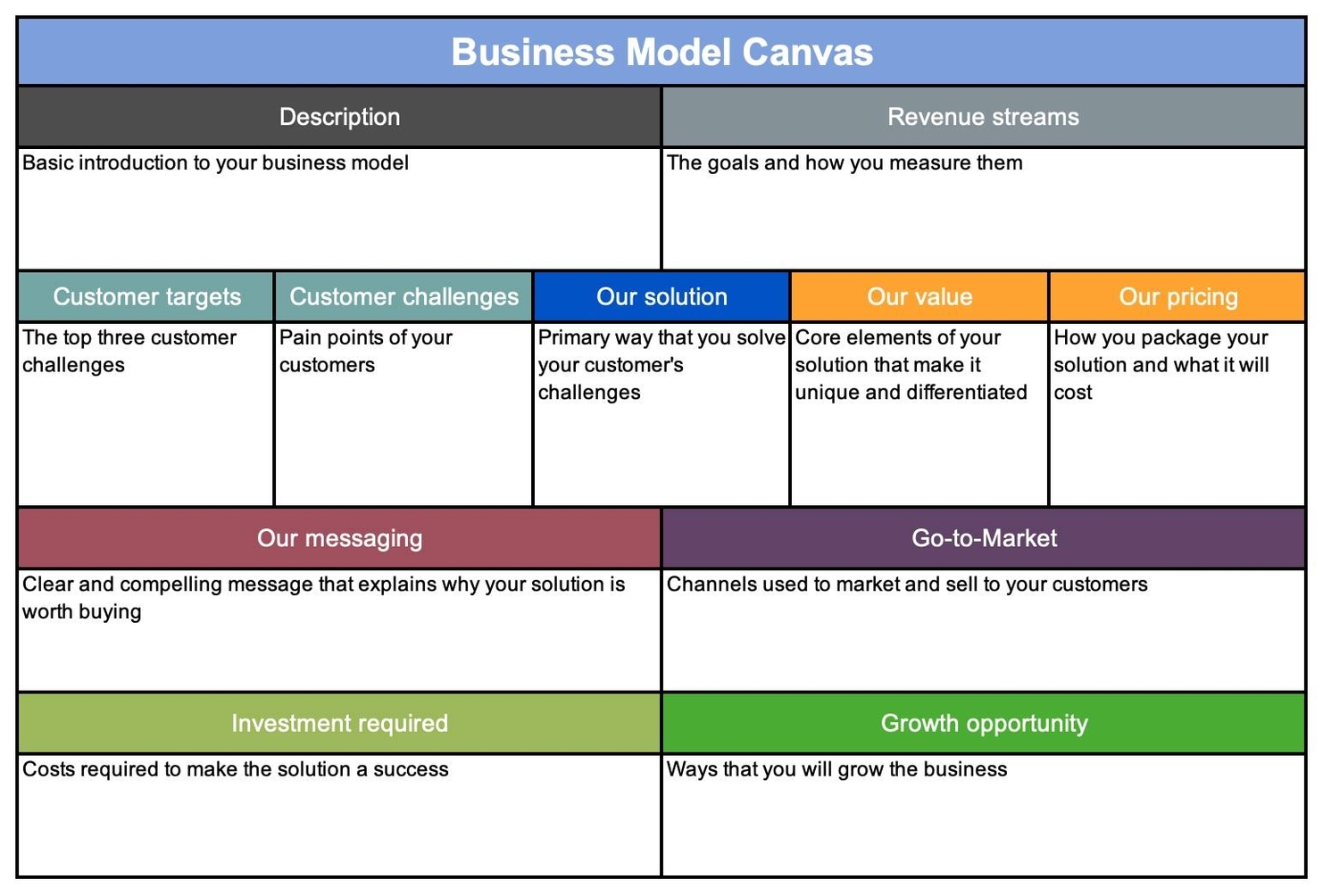
Business Model Canvas Clarified

Business Model Canvas Clarified

Business Model Canvas Clarified: The Business Model Canvas is a strategic tool that outlines a company’s value proposition, customer segments, channels, customer relationships, revenue streams, key resources, key activities, key partners, and cost structure. Clarifying the Business Model Canvas helps organizations understand and communicate their business model effectively, facilitating strategic planning and innovation.

Steps To Develop Business Strategy

Steps to develop business strategy

Steps to develop business strategy: Developing a business strategy involves steps like conducting a SWOT analysis (Strengths, Weaknesses, Opportunities, Threats), defining mission and vision statements, setting strategic objectives, formulating action plans, allocating resources, implementing the strategy, and monitoring and adjusting based on performance.

Market Intelligence Resources Framework Technology

Market intelligence resources framework technology

Market Intelligence Resources Framework Technology: The Market Intelligence Resources Framework Technology refers to the tools, systems, and processes used to gather, analyze, and interpret market data. This framework includes technologies like data analytics platforms, customer relationship management (CRM) systems, and competitive intelligence software that help businesses stay informed about market trends, customer behaviors, and competitor strategies.